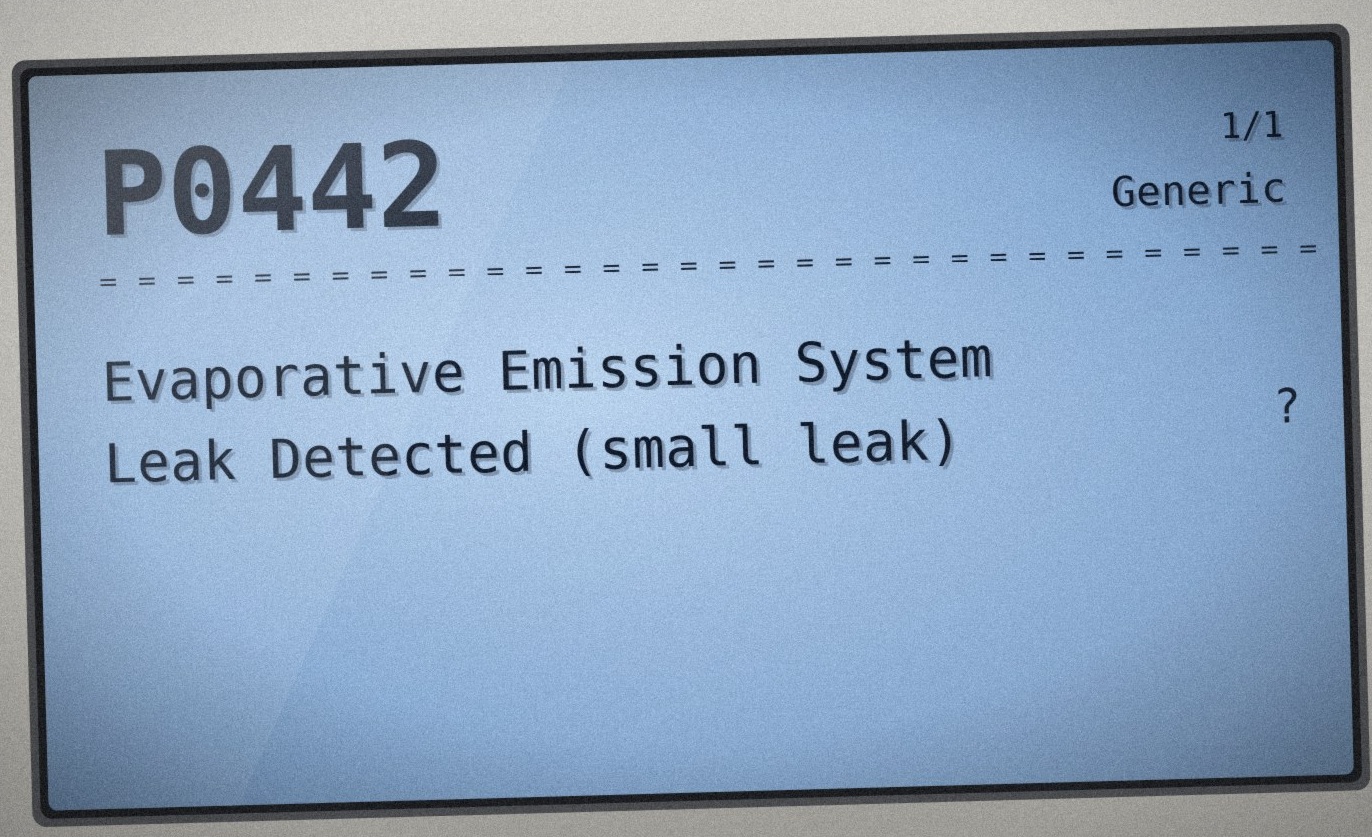
If you have a car or truck with a P0442 code, the onboard computer (ECM/PCM) is reading a problem with the evaporative emission system (EVAP).
The P0442 points to a small leak in the EVAP system.
Note: EVAP leaks often do not change how the car drives. The check engine light and a failed emissions test are the usual complaints.
What Is a P0442 Error Code?
A P0442 OBDII code is an Evap System Small Leak Detected.
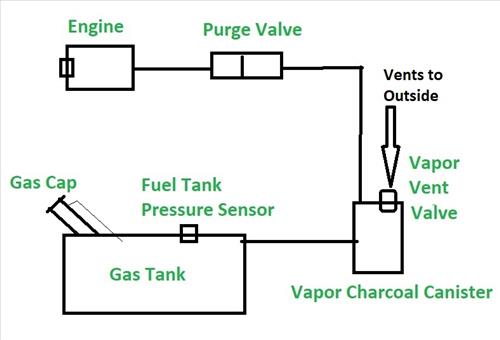
The EVAP system keeps fuel vapors in the gas tank from escaping into the air.
Vapors are stored in the charcoal canister and later purged into the engine to be burnt away.
The ECM/PCM seals the EVAP system during a monitor and watches pressure or vacuum.
If the system can not hold that seal because of a small leak, the unit will usually throw a P0442.
Exact leak size cutoffs are set by the vehicle maker and are not the same on every car.
P0442 sits in the middle of the common EVAP leak family between P0455 and P0456.
The cheap-first checks are much the same across those codes.
Causes of a P0442 Code
- Bad Or Loose Gas Cap
- Damaged Filler Neck Or Seal
- Cracked Evap Hose
- Bad Purge Valve
- Bad Vent Valve
- Leaking Charcoal Canister
- Small Fitting Or O-Ring Leak
Symptoms
- Check Engine Light
- Failed Emissions Test
- Mild Fuel Smell Near Cap Or Tank
- Hard Fuel Fill On Some Vehicles
- No Driveability Change In Most Cases
How to Diagnose a P0442 Code
Start with a scan tool and confirm P0442 is stored or pending.
Write down any related EVAP codes before anything is cleared.
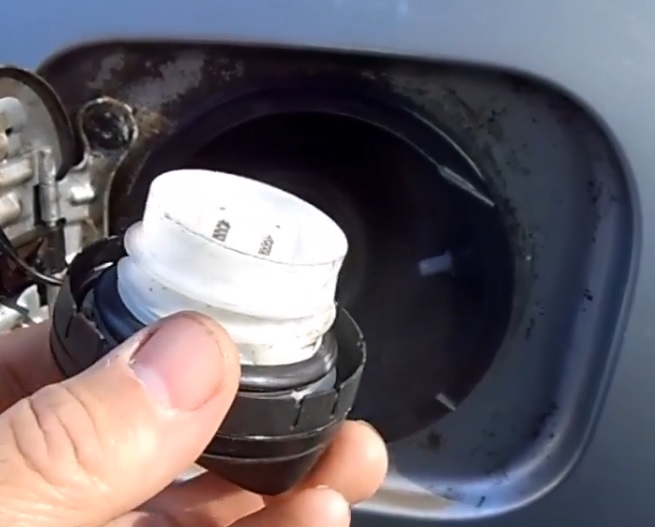
Check the gas cap first.
Remove the gas cap and look at the rubber seal for cracks flat spots or dirt.
Install the gas cap hand-tight then click, or follow the marking on the cap.
If the vehicle uses a locking gas cap, make sure the lock and seal seat fully.
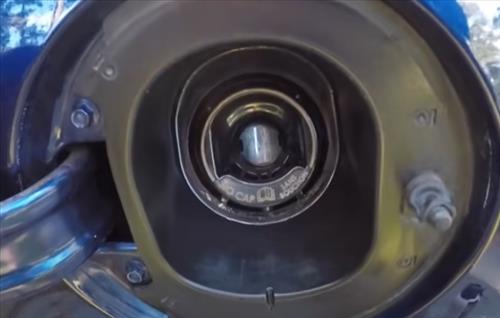
Note: Capless filler systems do not use a twist gas cap. Check the filler door flap and neck seal instead.
Clear the code and drive through normal mixed driving so the EVAP monitor can run again.
On many vehicles the fuel level often needs to be between roughly 15% and 85% before the EVAP monitor will complete.
If the P0442 stays gone, the gas cap was most likely the problem.
If the P0442 comes back, inspect the filler neck sealing surface next.
Look for rust dents or a warped lip where the gas cap seals.
Then follow the EVAP hoses from the tank area toward the charcoal canister and up to the engine bay.
Look for cracked rubber, loose quick-connects, and rubbed-through plastic lines.
Test the purge valve for sticking open when it should be closed.
A purge valve that will not seal can look like a small leak to the monitor.
Check the vent valve and canister vent path for a valve stuck open or a damaged vent hose.
If the cheap checks are good and the code still returns, a smoke machine is usually the next step.
Do not jump to a smoke machine before the gas cap filler neck hoses and valves have been checked.
Call around first if a shop smoke test is needed.
Is it Safe to Drive With a P0442 Code?
Yes, it is usually safe to drive with a P0442 code.
The engine will usually run the same.
Fuel mileage may change only a little if at all.
The vehicle will often fail an emissions or smog test until the code is fixed and the monitors are ready.
If a strong fuel smell is present, or raw fuel is seen, stop and have the fuel system checked before more driving.
How Do I Turn Off a P0442 Code?
Fix the leak first.
Clearing the code without a fix will usually bring the check engine light back after the EVAP monitor runs.
After the repair, clear the code with a scan tool.
Drive several drive cycles of mixed city and highway driving so the EVAP monitor can set ready.
Keep the fuel level in the mid range on many cars while waiting for the monitor.
If the light stays off and the monitor shows ready, the repair likely held.
If the light comes back, the small leak is still there.
How to Fix a P0442 Code
Work cheap-first.
Replace or reseat the gas cap before buying valves or a canister.
Then move to the filler neck, EVAP hoses, purge valve, vent valve, and charcoal canister.
Use a smoke machine only after the obvious parts look good.
Fixes
- Reseat Or Replace Gas Cap
- Clean Or Repair Filler Neck Seal Area
- Replace Cracked Evap Hose
- Replace Bad Purge Valve
- Replace Bad Vent Valve
- Replace Damaged Charcoal Canister
- Smoke Test And Seal The Leak Point
Gas Cap
A bad or loose gas cap is the most common P0442 fix.
The gas cap seal goes bad from age heat and fuel splash.
Examine the gas cap seal for cracks flattening or missing chunks.
Tighten the gas cap hand-tight then click until the ratchet slips.
Be sure to use a gas cap that matches the vehicle.
If the code comes back after a known good gas cap is installed, the leak is elsewhere.
Filler Neck / Seal
A rusty or dented filler neck will not seal even with a good gas cap.
Look at the sealing lip where the gas cap gasket sits.
Clean dirt and rust carefully if the lip is still round and smooth.
If the filler neck is cracked or badly corroded, the filler neck usually needs repair or replacement.
On some Chevy and Ford trucks the filler neck area is a common leak spot in salt states.
EVAP Hoses
Old cracked EVAP hoses are a frequent small leak source.
Rubber hardens and splits.
Plastic vapor lines crack at bends and clip points.
Follow the lines from the tank to the charcoal canister and from the canister to the purge valve.
Replace any hose that is cracked soft oil-soaked or pulled off a fitting.
A loose quick-connect that rattled open can throw a P0442 the same way a cracked hose can.
Purge Valve
A purge valve that will not close seals poorly and can set a small leak code.
The purge valve usually sits in the engine bay with two hoses on the unit.
When the ECM/PCM commands purge, the valve opens so vapors can be burnt in the engine.
If the purge valve is stuck open, the sealed EVAP test can fail.
Swap in a known good purge valve if testing shows the old unit is bad.
Vent Valve / Canister Vent
The vent valve lets the EVAP system breathe when commanded open.
If the vent valve is stuck open, the system may not hold vacuum or pressure during the monitor.
The vent valve is often on or near the charcoal canister by the gas tank.
Check the vent hose for kinks mud nests and breaks.
Replace a vent valve that will not close when commanded.
Charcoal Canister
The charcoal canister stores fuel vapors when the engine is off.
A cracked canister body or a broken fitting can cause a P0442.
Look for impact damage UV cracks and wet fuel-smelling spots around the canister.
Replace the charcoal canister if the shell or ports are leaking.
Canister work is often more labor than a gas cap or hose, so rule those out first.
Smoke Test
If the cheap parts look good, a smoke machine is the usual way to find a small leak.
A smoke machine feeds low-pressure smoke into the EVAP system.
Smoke comes out at the leak.
Have a shop or DIY setup seal the vent path as the service info calls for, then watch hose joints the filler neck the purge valve fittings and the canister seams.
Small leaks can take a minute or more to show.
Follow the smoke machine instructions and the vehicle service info.
Once smoke shows the leak point, repair that hose seal valve or canister and retest.
How Does P0442 Compare to P0455 and P0456?
A P0455 Evap System Large Leak Detected usually means a bigger opening in the sealed system.
A P0456 means a very small leak that can be harder to spot even with smoke.
The same gas cap hose and valve checks apply across all three.
The large leak write-up is here: Causes and Fixes of a P0455 Evap System Large Leak Detected.
The very small leak sibling is covered under the P0456 Evap System Very Small Leak articles for makes like Nissan and Jeep.
If a scan tool shows more than one of these codes, still start with the gas cap.
Summary
A P0442 code means the ECM/PCM found a small EVAP leak during the sealed-system monitor.
Start with the gas cap, then the filler neck, EVAP hoses, purge valve, vent valve and charcoal canister before paying for a smoke test.
The car is usually safe to drive, but it will often fail emissions until the leak is fixed and the monitors go ready.
Clear the code only after the repair, then complete the drive cycles needed for the EVAP monitor.
Most P0442 repairs are a gas cap or a small hose leak once the system is checked in order.
Have you had issues with a P0442 EVAP small leak code? Let us know in the comments below.